Greening School Behaviour
Greening school behaviour and attitudes means applying an environmental / sustainability ethic to all decisions we make and actions we take within our school community.

Research studies suggest that attitudes and behaviors of individuals are frequently modeled after the attitudes and behavior of others. Since most youth spend six to seven hours a day in school buildings, a coordinated school environmental program that focuses on preventing and solving environmental problems at the school site can provide an excellent model of attitudes and behaviors for young people to emulate.
— Robert W. Howe and John F. Disinger
One important goal of our Green School initiatives must be the development of an environmental ethic in all members of our school community, and the application of that ethic when making decisions that affect the school.

In other words, our school's organizational behaviour and attitudes must reflect our Green School initiative.
In even fewer words, we must walk our talk. We must be aware of the lessons our actions and behaviours as an organization — a community of learners with numerous stakeholders — are teaching.
Below are the ethics, attitudes, decisions, behaviours and actions I have witnessed or helped implement in schools going green.
Greening School Behaviour ... Getting Started
- always consider the impact of a behaviour or a decision on the Earth, the future, and the children of all species
- be sure the 3 Rs are in place and actively promoted (reduce whenever possible, reuse as often as possible, recycle as much as possible)
- conduct a waste/energy/water/paper audit and measure the school's ecological footprint, in order to have baseline data and a starting point (your Green School committee can do the audit, you can assign it to students, or you can hire a firm to do it)
- write and then follow green school policies
- a green purchasing policy (for example, buy only toilet paper made from recycled paper, ensure that new photocopiers make double-sided printing easy)
- a green event policy
- a policy for greening school hiring (for example, ensuring that all interviews for hiring new staff, contractors and suppliers include an environmental education / sustainability learning related question)
- a policy to ensure that fundraising campaigns are environmentally friendly
- green your language choices and metaphors
- adopt sustainable development principles as the school's discussion, planning and decision making framework
- put a sustainability representative on all school decision-making teams (include older students on these teams, as well, to model sustainable development principles such as intergenerational equity and multi-stakeholder consultation)
- create a Student Environmental Award, like an academic achievement or sports award, to present to students who demonstrate care and concern for the natural world
- suggest that your student council or student government include a Sustainability Student Representative
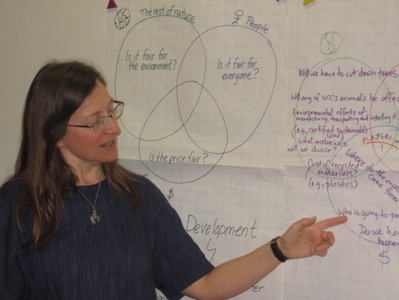
Grade 3 students (8 and 9 year olds) realized that sustainable development means fairness
Greening School Behaviour Around the School
Greening School Behaviour Can Save You Money
- insist that staff and students bring their own mugs and water bottles; no more paper/styrofoam/plastic cups or bottles in the staffroom or at special events (and the ensuing waste management costs)
- minimize paper usage in school publications

- set up a friendly competition to see which teacher can use the least paper per month and per year
- hold a Paperless Prof Day each month and share the most creative ways that teachers teach without paper (remember individual slates?)
- be sure that all school printing is done double sided
- train teachers — especially old ones and new ones! — in how to print double-sided copies, on both the photocopier and the computer printers
- ensure that memos and draft assignments are written only on scrap paper (never on good paper)
- email newsletters to all parents who do not specifically request a paper version
waste = food; aim to become a zero waste school (with thanks to Eco-Cycle)
- determine whether a highly efficient dishwasher would save water in the school kitchen or staffroom
- fix drips and leaks and running water fountains

Greening School Behaviour = Celebrating in Green Ways
- participate in environmental celebrations (Earth Day is always
April 22; World Environment Day is June 5) - at school events, serve locally grown foods (support local farmers), organic foods (safeguard your students' health), vegetarian foods (the meat industry is responsible for a large proportion [pdf] of greenhouse gases and environmental degradation worldwide — see Vegetarian Schools)
- use non throw away plates, cups, utensils and napkins
- practise gratitude as a way to help instill in students the habit of appreciation for Nature's gifts (see Saying Grace Together and Prayers for the Earth)
- green the holidays at school by observing/celebrating them in thoughtful and thought-provoking "deep green" ways
- let special natural events become teachable moments, no matter what you teach (as examples, I used to stop my French lessons when the pileated woodpecker came to the tree outside my classroom window; go outside at noon on the shortest and longest days of the year to compare the sun's position in the sky)
- take part in fundraising and friend-raising for environmental groups (for example, Audubon has a Pennies for the Planet campaign in the United States; your school could do something similar)

Greening School Behaviour Means Viewing Campus and Community as Classroom
- take weekly walkabouts with your class around the school yard and the neighbourhood
- go outside to learn more often; create an outdoor "classroom" if possible (this can be as simple as stumps under a shade tree)
- create a school garden, or naturalized areas with landscaping to attract butterflies and birds
- ensure that the area around your school is an idle-free zone
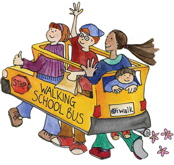
- encourage carpooling or walking school buses (visit Safe Routes to School for a Charlotte Diamond song about walking school buses and other resources)
- think about the radius around your school and consider how far students should travel on field trips (no more than 100 miles? or maybe just 100 steps outside the classroom?)
Howe and Disinger, in Teaching Desirable Environmental Ethics and Action through School Activities [pdf], suggest five elements that will help in the process of greening school behaviour:
- a set of policies
- procedures for identification of problems
- action plans to prevent and alleviate problems
- plans for monitoring actions, and
- evaluation policies, identification activities, action activities, and monitoring activities.
They suggest that we ensure our schools have environmental policies and a program for
- purchasing materials
- use of materials in and around schools
- waste disposal
- identifying, monitoring and correcting environmental problems (such as radon, contaminated drinking water, asbestos, paints and chemicals used in classrooms, and "sick buildings")
Good luck with all your (ad)ventures in greening school behaviour, and be sure to have fun. You know what they say ...
if it ain't fun, it ain't sustainable!
Return from Greening School Behaviour to School Greening
Visit Greening the Curriculum
Visit Greening School Facilities
Go to GreenHeart Education Homepage
