Climate Change Primer
for Educators
An Introduction to Atmospheric
Greenhouse Gas Pollution
This climate change primer is intended to give you enough of the global warming science and climate change research that you'll feel comfortable teaching about greenhouse gas pollution or discussing it with your students of any level. Solutions and actions are included, too.
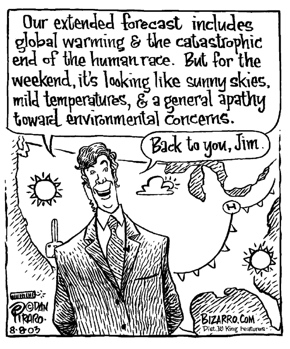
Used with permission

We are risking the ability of the human race to survive.
— Dr. Rajendra Pachauri, Former Chair of the IPCC
Climate change is an existential threat to most life on the planet, including and especially humankind.
— UN Secretary-General António Guterres
For Preschool and Primary Grades
(3-9 Year Olds)
Observe the Weather
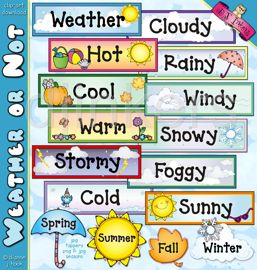
Even though lots of young children today face challenges that no child should have to face, they still deserve a childhood. After all, the climate change emergency is our problem; it belongs to us adults. So while today's children are going to be impacted (if they're not already) by the changing climate, anyone younger than 10 years old or so hasn't yet developed the sense of agency to do anything about it.
That's why teachers of primary
(5 to 9-year-old) students have a different sort of responsibility when it comes to climate change. Your task is to help young children observe and learn about the weather (which many of you do already, especially kindergarten teachers), especially with a view to recording it over time to start seeing the seasonal trends and patterns that make up climate.
Of course, preschool children learn concrete concepts (sun, clouds) better than abstract concepts (weather) and early childhood teachers must approach this topic accordingly.
Learn How to Grow Food
Another privilege of preschool and primary teachers is gardening with your students. Windowsill gardens. Classroom gardens. School yard gardens. Today's youngsters need to learn to grow food. If you can combine weather observation with gardening, even better. And if you don't know how to garden, learn along with your students! Visit School Gardens and Climate Change for more ideas.
Further strategies for making your school garden more resilient to climate change are available on our Climate Change Strategies for School Gardens page.
For Pre-Adolescent Students
(10-12 Year Olds)
Learn the Carbon Cycle
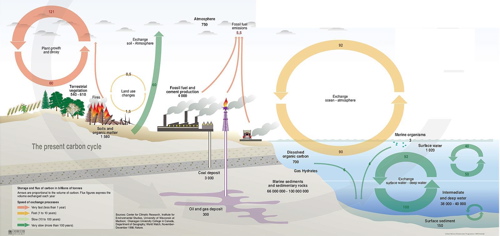
Carbon is the building block of life. Therefore, the carbon cycle is a vital part of any climate change primer.
NASA's Earth Observatory has a simple yet thorough explanation of both the fast or short-term (biological) and the slow or long-term (geological) carbon cycles.
Most of us learned the hydrological (or water) cycle in school. And we seem to have learned it well. Perhaps that's because we experience the three phases of water in our everyday lives: drinking water and doing dishes, wiping condensed steam off the mirror after our shower, keeping our hands away from the boiling hot steam when we're making tea, putting ice cubes in our drinks or skating in wintertime. But we also drew pictures of it (I remember those arrows!) and did experiments with it when we were students.
On the other hand, how many of us learned the carbon cycle in school? I know I didn't. When I first heard about the carbon cycle as an adult, I wondered if it had something to do with the cleaning of barbecues!
But knowledge of the carbon cycle is at the very base of our understanding of global warming, greenhouse gases, and climate disruption. Students at this age will have fun tracing the short- and long-term carbon cycles or acting them out on the playground! Help your students learn the carbon cycle, no matter what age they are.
For Adolescent Students
(13-15 Year Olds)
Learn the Science of Climate Change
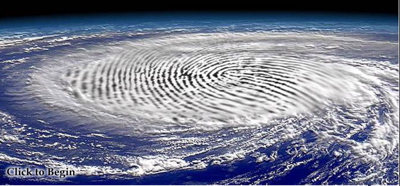
See especially
Climate Change: Fitting the Pieces Together.
(You'll have to register, but it's free.)
The most important part of any climate change primer is the science. Click on the thought-provoking illustration above to link to a series of free modules from MetEd on the science of global warming, climate change, and other meteorological topics. You will have to register, but it's well worth it (and free).
The COMET Program, in partnership with the National Environmental Education Foundation has produced a thorough, clear, well laid out and nicely illustrated set of educational modules entitled Climate Change: Fitting the Pieces Together.
Their MetEd program is "a free collection of hundreds of training resources intended for the geoscience community." It includes short courses on climate change topics such as drought, urban flooding, and even communicating the risk of extreme weather events (a social studies / language arts sort of topic).
The Arctic methane emergency and a zero-carbon world, on SMTV.
Only Zero Carbon.org is a website that explains why we must get to zero carbon emissions as rapidly as possible to avoid climate change catastrophe.
Other learningful websites from GreenHeart's Dr. Peter Carter include:
Learn How Numbers Count
A climate change primer would be incomplete without some math. Greenhouse gas (GHG) concentrations are everything when it comes to climate change, so understanding the numbers is extremely important.

- the baseline for carbon dioxide or CO2, the most significant GHG in the atmosphere (after water vapour) = 280 parts per million (ppm) at the start of the industrial age
- a widget like the one above can show the level of CO2 in the atmosphere (visit
CO2 Now
for news on current CO2 levels in the atmosphere)
- how quickly it's rising = an unprecedented almost 3 ppm per year (which might not sound like much, but each tiny CO2 molecule acts as a little radiator and can remain in the atmosphere for as long as a thousand years)
- the "safe level" of CO2 in the atmosphere (because dangerous carbon feedbacks have already begun) = less than 350 ppm, and probably closer to 300 ppm
- the only safe target for avoiding climate catastrophe is ZERO: zero burning of fossil fuels and virtually zero carbon emissions, as rapidly as humanly — and humanely — possible (Rajendra K. Pachauri, former chair of the Intergovernmental Panel on Climate Change, when asked for the April 2008 Indian edition of Reader's Digest whether it's possible to reverse global warming, responded: "Theoretically, yes. You will really have to bring down your emissions to below zero and find ways by which you can absorb existing carbon dioxide. Technologically, that's entirely possible.")
So, do the math with your (older) students:
Current level — safe level = how much CO2
needs to be removed from the atmosphere
Here's the problem to pose to them:
- Current levels of GHGs are now dangerously high, and atmospheric greenhouse gas pollution is already creating impacts such as:
- global surface warming (heating of the lower atmosphere — the air — over land masses)
- climate disruption
- ocean heating
- ocean deoxygenation
- ocean acidification
- increasing extreme weather events (impacting the sustainability of agriculture)
And yet we keep increasing our emissions into the atmosphere (instead of decreasing them). Carbon sinks are failing (for example, some forests that used to hold or "sink" carbon are now emitting more carbon than they take up), so emissions are not being "absorbed" into the Earth's systems, especially the oceans (through the delicately tuned carbon cycle) as efficiently as they used to be. Plus, carbon feedbacks have begun in the Arctic (for example, higher temperatures thaw permafrost, releasing carbon dioxide and methane, which, as greenhouse gases, lead to further global heating, which leads to more thawing, and so on) and in the world's forests.

- What needs to happen to regain the carbon equilibrium and the stable climate that allowed the flourishing of agriculture and therefore human civilizations and cultures over the last five to ten thousand years (since the end of the last ice age)?
For Senior Students (16-18 Year Olds) and Adults
Understand Carbon Feedbacks and Why They're So Dangerous
"Wake Up, Freak Out — Then Get a Grip"
(might take a moment to download)
Wake Up, Freak Out - Then Get a Grip from Leo Murray.
This 11-minute movie is worth every second because it explains carbon feedbacks (and the scariest feedback of all, the destabilization of methane hydrates — the methane timebomb) so clearly. Understanding carbon feedbacks is a crucial part of any climate change primer — for older students and adults.
By the way, this movie mentions that "the fate of civilization itself hangs in the balance." It's worse than that. We are heading toward making the oceans so acidic and the biosphere so uninhabitable that the survival of practically all life is now threatened.
But What Can I Do?
For teachers and older students, first, please pass on this climate change primer to others. Write to let us know if there's anything we should add to it.
Next, it's always election time somewhere in the world ... please do all you can to make climate change and renewable energy an important election issue — THE MOST IMPORTANT ELECTION ISSUE OF ALL TIME — for all candidates and governments, at every level.
But we don't have to wait for election time. We can write, email, phone or visit our elected representatives right now. We can share this climate change primer or other information with them. When asked what would make a difference in Canada, one politician stated, "One hundred thousand people on Parliament Hill." The United States had its Million Man March in Washington, DC. What about a Million Student March? The pandemic squelched the inspiring global youth strikes for climate action. You could help your students get involved in reviving them!
Follow The Climate Mobilization, Sunrise Movement, This is Zero Hour, and Fridays for Future.
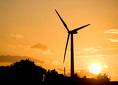 You can start spreading a compelling vision of a sustainable future. Imagine a world based on a renewable energy economy. It would be a world that is safe, clean and healthy (fossil fuel pollution kills millions of people every year, mainly due to respiratory illness), peaceful (no more resource wars) and equitable (no one owns the sun, wind, tides or Earth's core heat). Students of all ages can certainly help to illustrate and talk up this future.
Finally, here's what a wonderful friend of ours, Ricci O'Reilly, did when he learned about global climate change. He was moved to write a song. He made a video. He posted it on YouTube. He's getting responses from around the world! Imagine your students doing something like that. (And don't think you have to know how to do it first; they'll teach you.)
It's the Right Time
Understand the Urgency of the Climate Change Emergency
According to the Worldwatch Institute's State of the World 2009 report, Into a Warming World, "global emissions of carbon dioxide must reach a peak in less than 10 years and then begin a rapid decline to nearly zero by 2050 to avoid catastrophic disruption to the world's climate." A decade later, the Intergovernmental Panel on Climate Change (IPCC) reiterated this urgency in its 2018 1.5ºC Special Report.
Then in 2019, the IPCC chair, Hoesung Lee, reminded us "that our assessments show that climate stabilization implies that greenhouse gas emissions must start to peak from next year. But emissions are continuing to increase, with no sign of peaking soon." In 2021, UN Framework Convention on Climate Change Executive Secretary, Patricia Espinosa, said, "We either choose to achieve rapid and large-scale reductions of emissions to keep the goal of limiting global warming to 1.5ºC — or we accept that humanity faces a bleak future on this planet."
Christopher Flavin, former president of the Worldwatch Institute, which was a well-respected US-based environmental think tank, explained that "humanity will face grave danger if we don't move forward now." Once again, we discover that we haven't been moving fast enough.
Emissions of carbon dioxide will actually need to "go negative" — with more being absorbed than emitted — if we want to avoid unacceptably dangerous temperature increases and impacts. The only easy way to accomplish this with current (still unviable) carbon capture technologies is to drastically reduce our emissions! "Net zero" carbon is a boondoggle that simply sees larger countries and corporations kicking their carbon "can" down the street.
According to the IPCC, the bottom line for climate change mitigation and adaptation is "substantial emissions reductions over the next few decades and near zero [note: not "net zero"] emissions of carbon dioxide and other long-lived greenhouse gases by the end of the century" (IPCC 2014, Fifth Assessment Report Synthesis Headline Statements). (Greenhouse gases that are long-lived in the atmosphere include carbon dioxide, methane and nitrous oxide.)

Today, we cannot attain the goal of global sustainability unless we successfully mitigate the impacts of atmospheric greenhouse gas pollution and learn to adapt to its impacts.
We are all being called on to "provide unrelenting leadership" if we want to achieve the necessary reductions in greenhouse gases. Indeed, teachers must — and can — become climate change heroes for their students!

Please share this Climate Change Primer with other educators.
Just copy and paste this link into an email message to your colleagues, administrators, trustees and professional organizations:
https://www.greenhearted.org/climate-change-primer.html
Here's a link to the educational rationale for making global warming, climate change and renewable energy education the overarching focus of curriculum:
https://www.greenhearted.org/global-warming.html
Thank you.
Go to Global Warming as the Overarching Focus for Curriculum
Visit GreenHeart's Compassionate Climate Action Blog
Return from Climate Change Primer to GreenHeart Education Homepage
